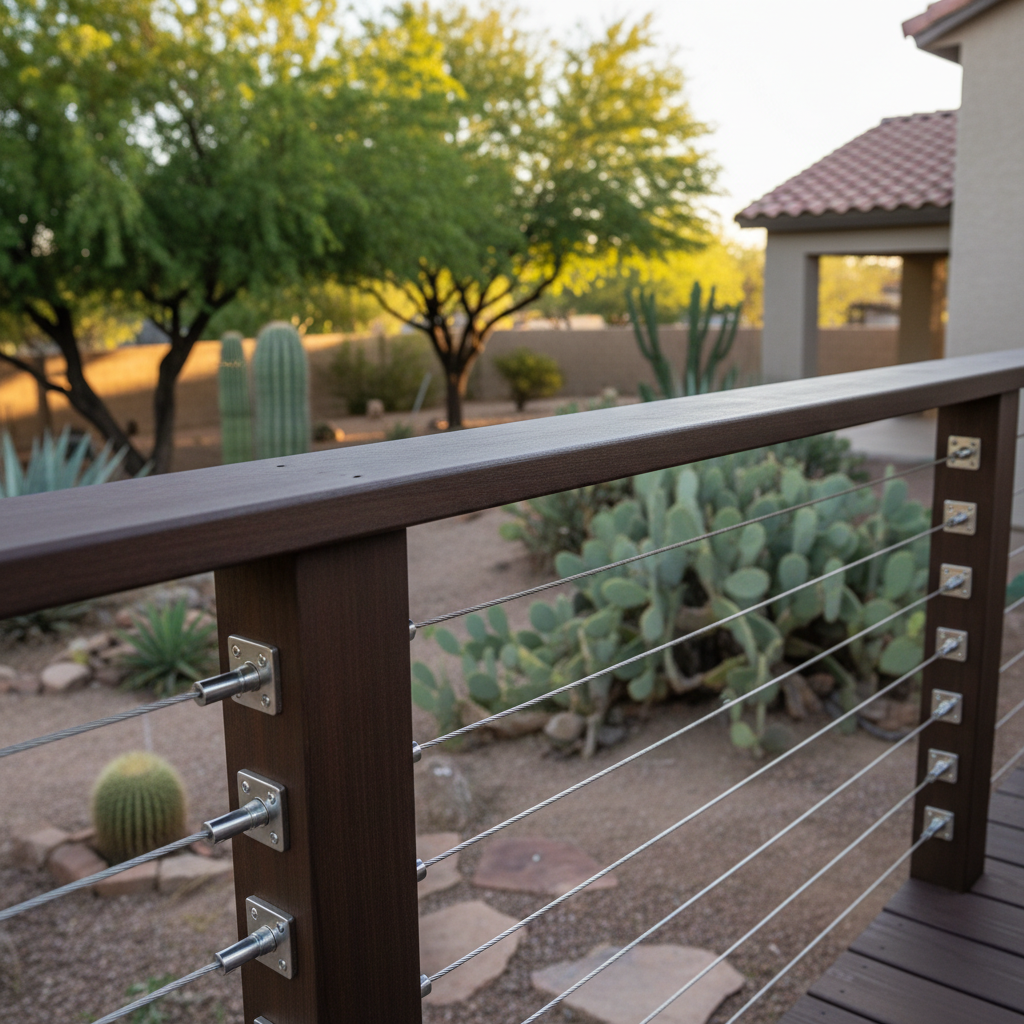
Alright, let's talk deck railings. You've got a deck, or you're building one, and you need to keep folks safe, right? But it's not just about safety; it's about how it looks and how long it lasts, especially out here in Queen Creek with our intense sun and monsoon winds. I get a lot of questions about railings, so I figured I'd lay out some straight answers for you.
What are the main types of deck railing materials I should consider?
You've got a few solid options, and each one has its pros and cons, especially for our desert climate. I'll break down the big ones:
- Wood: This is classic, right? It's often the most affordable upfront. You can get cedar, redwood, pressure-treated pine, or even some exotic hardwoods. The look is natural, and you can stain or paint it to match your home. The downside? It needs maintenance. That Queen Creek sun and occasional rain will beat it up. You'll be sanding, staining, or painting every few years to keep it looking good and prevent rot or splinters.
- Composite: This stuff is fantastic for low maintenance. It's usually a blend of wood fibers and plastic. It comes in a bunch of colors and styles, often mimicking wood grain without the upkeep. It won't rot, splinter, or get eaten by termites. The initial cost is higher than wood, but you save a ton on maintenance over its lifespan. It holds up really well to our sun, though some darker colors can get pretty hot to the touch.
- Aluminum: If you want sleek, modern, and virtually no maintenance, aluminum is your go-to. It's strong, lightweight, and comes in powder-coated finishes that resist fading, chipping, and rust. You'll see it in black, bronze, white, and other colors. It's great for visibility if you've got a view you don't want to block, especially with glass or cable infills. It's generally more expensive than wood but often comparable to, or slightly more than, composite.
- Vinyl (PVC): Similar to composite in its low-maintenance appeal, vinyl railings are also durable and won't rot or splinter. They're usually white, though you can find other colors. They can sometimes look a bit more 'plastic-y' than composite or wood, but they're very tough against the elements.
- Cable Railing: This is a style, not a material, but it's usually paired with wood, composite, or metal posts. Thin stainless steel cables run horizontally, giving you an almost unobstructed view. It's super modern and popular for homes with mountain views or open backyards. It's definitely on the pricier side due to the specialized hardware and installation.
Do I need a railing at all? What are the local code requirements in Queen Creek?
Yes, you almost certainly do. Here's the deal: if your deck surface is 30 inches or more above the ground or a lower adjacent surface, you need a guardrail. That's a pretty standard code requirement across the board, and Queen Creek definitely follows it. The railing itself needs to be at least 36 inches high for residential decks. Commercial decks usually require 42 inches, but we're talking homes here. And here's a big one: the baluster spacing. You can't have any opening in the railing that allows a 4-inch sphere to pass through. That's to prevent little kids from slipping through or getting their heads stuck. It's a safety thing, plain and simple. Always check with the Town of Queen Creek's building department or a licensed contractor like Done Right Decks of Queen Creek to make sure you're up to snuff on the latest local codes before you start any project.
How much does deck railing installation usually cost?
This is where it gets tricky because there's such a huge range. It depends heavily on the material, the complexity of your deck layout (lots of corners? stairs?), and whether you're doing it yourself or hiring a pro. As a rough ballpark, here's what I generally see:
- Wood: You might be looking at $25-$50 per linear foot installed. This can vary a lot based on the type of wood and how elaborate the design is.
- Composite: Expect to pay $40-$80 per linear foot. Again, depends on the brand and style.
- Aluminum: Typically $50-$100 per linear foot.
- Vinyl: Usually in the $30-$70 per linear foot range.
- Cable Railing: This is usually the most expensive, often $80-$150+ per linear foot due to the materials and precision required for installation.
These are just averages, and they include materials and labor. Don't forget to factor in things like gates, special post caps, or any structural reinforcement your deck might need to support the new railing. Get a few detailed quotes; that's always my advice.
Can I install deck railings myself, or should I hire a professional?
Look, I'm a contractor, so you might think I'd always say hire a pro. But honestly, it depends on your skill level and the type of railing. If you're handy with tools, comfortable with measurements, and have a good understanding of building codes, a simple wood railing or even some vinyl systems can be a DIY project. The kits they sell these days are pretty good.
However, if you're dealing with a complex deck design, stairs, or materials like cable railing or custom metalwork, you're probably better off hiring someone. Getting the posts perfectly plumb, ensuring proper spacing for balusters, and securely attaching everything so it meets code and can withstand a good lean against it takes experience. Plus, if you mess up, it's not just an aesthetic problem; it's a safety hazard. For guaranteed code compliance, a professional installation is usually the way to go.
How do I maintain my deck railings in Queen Creek's climate?
Our climate is tough on everything outdoors, and railings are no exception. Here's the lowdown:
- Wood: This needs the most love. Clean it regularly to remove dust and dirt (we get a lot of that desert dust!). Every 2-3 years, you'll likely need to clean, sand, and reapply a good quality stain or sealant. This protects it from UV damage, moisture, and keeps it from drying out and cracking.
- Composite & Vinyl: These are the low-maintenance champs. A simple wash with soap and water a couple of times a year is usually all they need. You might use a soft brush to get off any stubborn dirt or mildew (though mildew is less common here). Avoid harsh chemicals or abrasive cleaners that could damage the surface.
- Aluminum & Cable: Very little maintenance here. Just wipe them down with a damp cloth to remove dust and keep them looking clean. Check the cable tension periodically if you have cable railings, and make sure all fasteners are secure.
No matter the material, always keep an eye out for loose fasteners, wobbly posts, or any signs of damage. Catching small issues early can prevent bigger, more expensive problems down the road.
What's the best way to choose a railing style that matches my home?
This is where your personal taste comes in, but also consider your home's architecture. If you've got a traditional stucco home, a classic wood picket railing or a more decorative aluminum might look great. For a modern desert contemporary, sleek aluminum with glass panels or cable railing could be perfect. A rustic or farmhouse style might lean towards chunkier wood posts or even some wrought iron elements.
Think about the view, too. If you're overlooking the San Tan Mountains, you probably don't want a solid wall of railing blocking it. Cable or glass railings are ideal for preserving views. If your deck faces a neighbor's wall, then privacy might be more important, and a solid panel or closely spaced balusters could be a better choice. Don't be afraid to drive around Queen Creek and look at what other people have done. Take pictures of what you like and what you don't. It helps a lot when you're talking to a contractor or planning your own project.
Are there any common railing problems specific to Queen Creek?
Oh yeah, our desert environment throws some curveballs. The biggest one is the sun. That intense UV radiation absolutely bakes everything. Wood will dry out, crack, and fade much faster here than in a more temperate climate if it's not properly maintained. Even composite and vinyl can fade over time, though they hold up much better than untreated wood. Darker colored railings, especially metal, can get incredibly hot to the touch in the summer, so keep that in mind if you have kids or pets.
Then there's the dust. We get a lot of it. Your railings will get a fine coating of desert dust pretty quickly, so regular cleaning is key to keeping them looking good. And while we don't get a ton of rain, those monsoon downpours can be fierce. Make sure your railing posts are properly flashed and sealed where they meet the deck surface to prevent water intrusion, especially into the deck framing. That's how rot starts, even in the desert, if water pools up.
Termites are another concern, especially with wood railings. Make sure any wood components are treated or installed with proper clearances from the ground to deter these little guys. We've seen plenty of termite damage in older wood decks and railings around neighborhoods like Johnson Ranch and Ironwood Crossing.
Choosing the right railing for your Queen Creek home means balancing aesthetics, safety, budget, and how much time you want to spend on maintenance. If you've got more questions or want to talk specifics about your deck, give us a shout at Done Right Decks of Queen Creek. We're always happy to help.