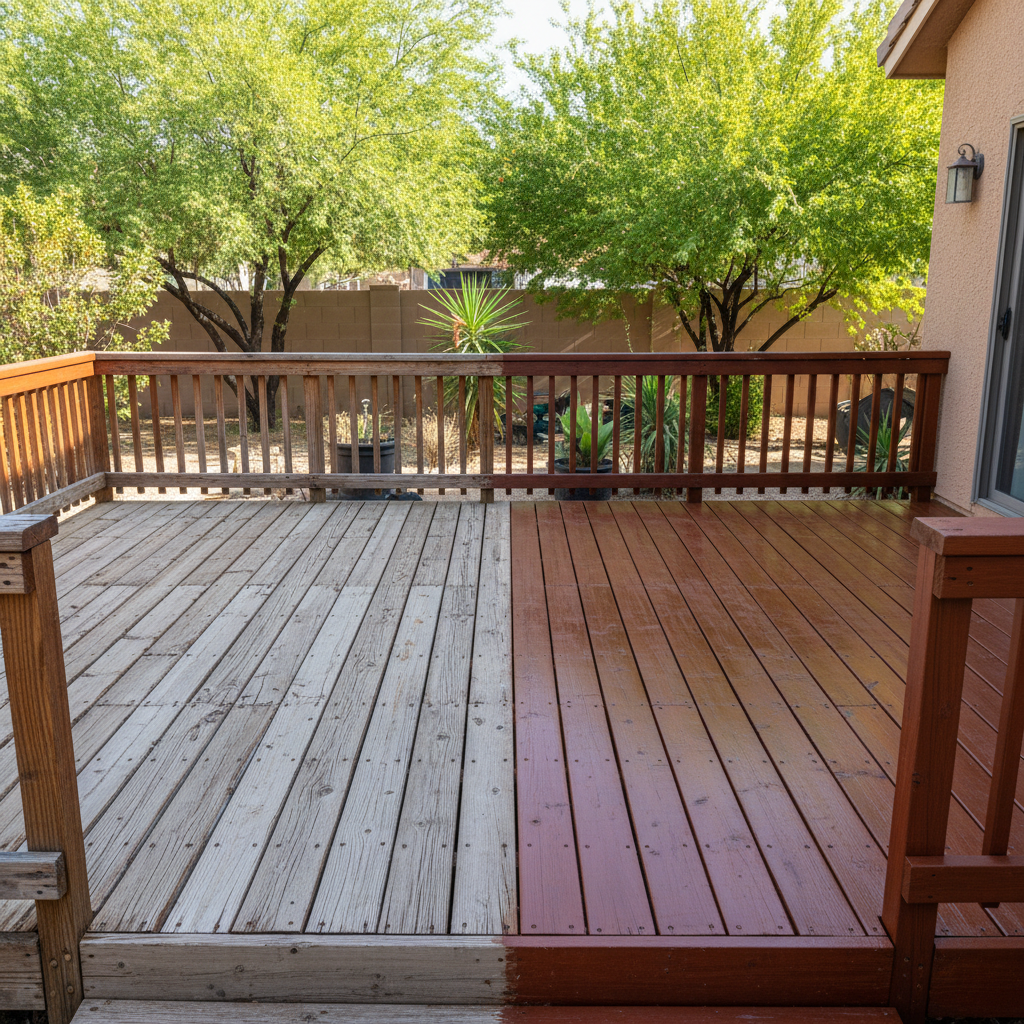
Alright, let's talk about your deck for a minute. You've got a wood deck, right? And after a few years of that Arizona sun just relentlessly beating down, it's probably looking a little worn out. Maybe the color's faded, or the wood's starting to dry out. So, you're probably thinking, "Should I paint it or stain it?" That's a super common question, and honestly, there isn't one single "right" answer for everyone. But I can definitely tell you what I've seen work best right here in Queen Creek.
Appearance: What Look Are You Going For?
This is usually the first thing folks consider, and it's a big one. Paint gives you a solid, opaque color. Think of it like painting the walls inside your house, but, you know, for your deck. You get a huge range of colors, and it completely covers the wood grain. If you have an older deck with some dings and imperfections, paint can hide those really well, giving it a fresh, uniform look. It's perfect if you want to match your deck to your house trim or make a bold statement.
Stain, on the other hand, comes in different opacities. You've got transparent, semi-transparent, semi-solid, and solid options. Transparent and semi-transparent stains let the natural beauty of the wood grain shine through, just enhancing its color. Semi-solid and solid stains offer more color, but they still let some of that wood texture peek through. If you love the look of natural wood, even just a hint of it, stain is definitely your pick. It gives off a more organic, rustic vibe.
Durability & Protection: Battling the Arizona Elements
Here in Queen Creek, durability is absolutely crucial. We don't get a ton of rain, sure, but that intense UV radiation and the wild temperature swings—hot days to cool desert nights—are just brutal on wood. Paint forms a film on top of the wood. This film can offer excellent protection against UV rays and moisture, but it's also prone to peeling, cracking, and chipping. When paint fails, it usually starts to peel, especially in high-traffic areas or where water might sit. Once it starts, it's a real headache to fix because you often have to scrape and sand the whole thing off.
Stain actually soaks into the wood fibers instead of just sitting on the surface. This means it's much less likely to peel or chip. Instead, it tends to fade and wear down gradually over time. When it's time to reapply, you usually just clean the deck and put another coat on. This penetration also helps protect the wood from the inside out, offering good UV resistance and helping to keep moisture from soaking in. For our dry climate and intense sun, a good quality solid or semi-solid stain often holds up better in the long run, saving you from those peeling paint nightmares.
Maintenance: How Much Work Do You Really Want To Do?
Nobody wants a high-maintenance deck, especially when you'd rather be out there enjoying it. As I mentioned, paint can peel. When it does, you're looking at some serious prep work for touch-ups or a full repaint. That means scraping, sanding, priming, and then painting again. It's a labor-intensive job, and you'll likely be doing it every 3-5 years, maybe even sooner in high-traffic spots or if you're not using top-tier products. What a pain!
Stain is generally much easier to maintain. Because it fades rather than peels, reapplication is a lot simpler. You'll typically just clean your deck thoroughly, let it dry, and then apply another coat of stain. This usually needs to be done every 2-4 years for transparent/semi-transparent stains, and 3-5 years for semi-solid/solid stains. The prep work is minimal compared to repainting, which is a huge plus for homeowners who want to spend their weekends relaxing, not scraping paint.
Cost: Initial Outlay & Long-Term Value
Upfront, the cost of materials for good quality deck paint and stain can be pretty similar. Where the costs really diverge is often in the labor, especially if you're hiring someone like us at Done Right Decks of Queen Creek. Painting usually requires more extensive surface preparation, like sanding down old paint, which adds to the labor time. Plus, paint often needs a primer coat before the topcoats, adding another step.
Over the long term, stain often turns out to be more cost-effective because maintenance is simpler. While you might re-stain a bit more frequently than you repaint, the labor involved in re-staining is significantly less. You avoid the costly and time-consuming stripping and scraping that often comes with paint failure. Think about it: our intense summer monsoons, even if they're short, can sometimes cause paint to bubble or peel if the wood wasn't perfectly dry or prepped right. Stain handles those moisture fluctuations better without catastrophic failure.
My Recommendation for Queen Creek Homeowners
Given our unique desert environment—the relentless sun, the dry air, the occasional dust storms, and those big temperature swings—I almost always lean towards a high-quality solid or semi-solid deck stain for wood decks. It just performs better in the long run without the headaches of peeling paint.
You get excellent UV protection, good moisture resistance, and easier maintenance. While paint can look great initially and and offers a wider color palette, the maintenance cycle and the potential for peeling make it a tougher sell for decks in our climate. If you've got a new deck, or one that's in good shape, a semi-transparent stain can really highlight the wood's natural beauty. For older decks that need more coverage, a solid stain will give you that uniform look without the peeling worries of paint.
Ultimately, it's your deck, and your choice. But if you want something that looks good, protects your investment, and doesn't demand all your free time for upkeep, stain is usually the smarter play here in Queen Creek. If you're still on the fence or need a hand getting your deck looking its best, don't hesitate to give Done Right Decks of Queen Creek a call. We're always happy to help you figure out the best approach for your specific situation.