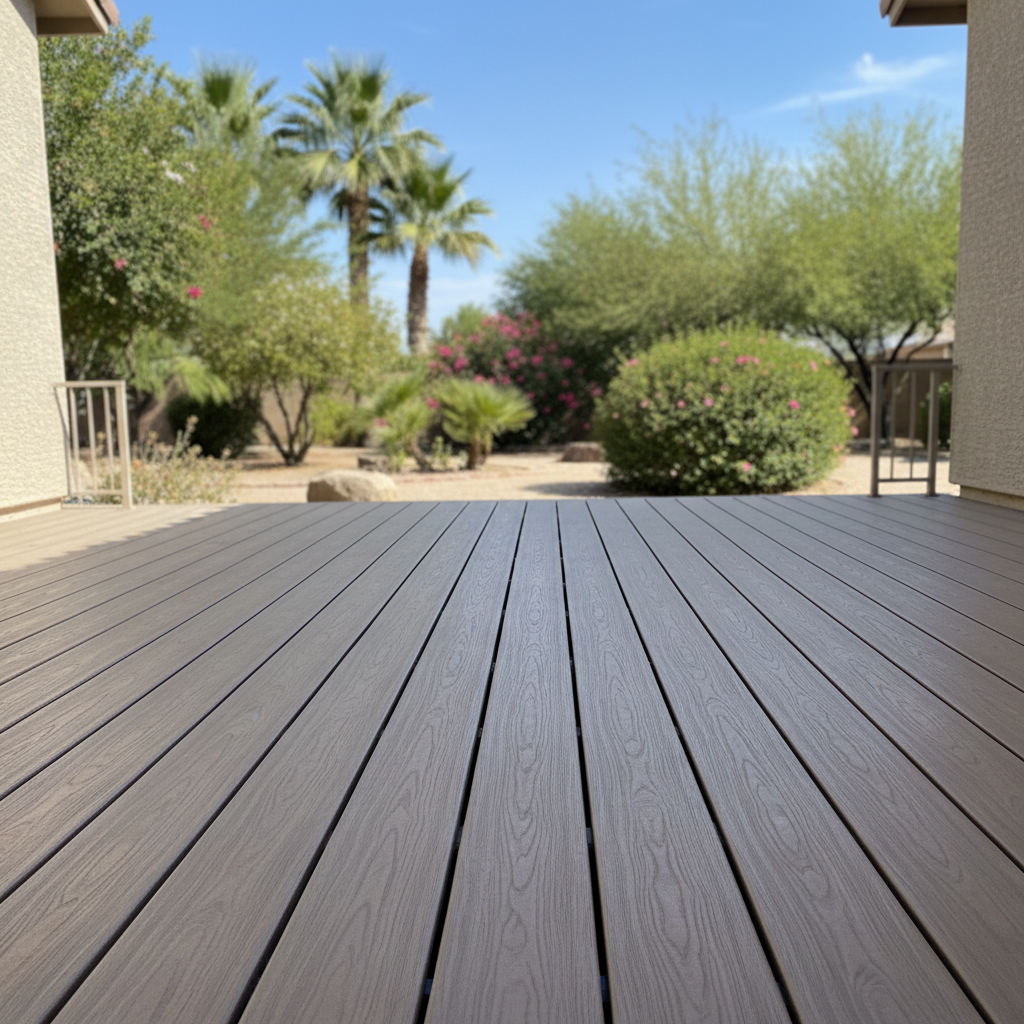
You picked composite decking for a reason, right? Less fuss, more enjoyment. That's the promise. And it's mostly true, but 'maintenance-free' isn't really a thing, especially not out here in Queen Creek. Our desert climate, with its intense sun and dust, still demands a little attention if you want your deck to look as good as the day it was installed. So, what do I tell my clients about keeping their composite decks in top shape?
Regular Cleaning: Your First Line of Defense
This is the big one, and it's pretty straightforward. Honestly, you'd be surprised how much dust and grit our Arizona winds kick up. That fine dust, mixed with a little rain or morning dew, can really settle into the grooves and textures of your composite boards. Over time, it makes your deck look dull, and if you leave it too long, it can even encourage mold or mildew growth, especially in shaded spots or where water tends to pool.
So, what exactly does "regular" mean? I'd say a good sweep with a soft-bristle broom at least once a month. More often if we've had a dust storm, or maybe you've been doing some messy backyard projects. For a deeper clean, grab a bucket of warm, soapy water (dish soap works just fine) and a soft brush. Scrub along the grain of the boards. Then, rinse it off thoroughly with a garden hose. Just make sure you don't let the soapy water dry on the deck, otherwise you'll get streaks. For those really stubborn spots, most composite manufacturers have specific cleaners they recommend. Check their website if you're not sure.
You *can* use a pressure washer, but you need to be careful. Use a wide fan tip (40-degree or higher) and keep it at a low pressure, around 1500 PSI. Always keep that nozzle moving. Too much pressure, or holding it too close, and you can damage the surface, leaving permanent marks. Trust me, I've seen it happen. If you're not comfortable with a pressure washer, a good scrub brush and some elbow grease will absolutely do the trick.
Dealing with Our Queen Creek Sun and Heat
Our sun is no joke. It's why we build so many pergolas and shade structures here at Done Right Decks of Queen Creek, after all. While composite decks are designed to resist fading, years of intense UV rays can still take a toll. There's not much you can do about the sun directly hitting the deck, but keeping it clean helps prevent the surface from breaking down. Also, keep an eye out for reflective surfaces near your deck, things like low-E windows or metal siding. These can concentrate heat and cause localized warping or melting on the composite. It's rare, but I've definitely seen it happen on decks in neighborhoods like Johnson Ranch where houses are built close together.
Another thing to watch for is heat build-up from stuff like dark-colored doormats or planters. If these sit on your deck in direct sun for long periods, heat can get trapped underneath them and cause discoloration or even slight warping. Lift them up and clean under them regularly, okay?
Warning Signs and When to Call a Pro
Composite decks are tough, but they're not invincible. Here are a few things to keep an eye on:
- Fading or Discoloration: A little fading over a decade is normal, but if you see significant, uneven fading or strange splotches, it could point to a manufacturing defect or an issue with a cleaner you used.
- Mold or Mildew That Won't Go Away: If you've cleaned thoroughly and still see persistent black or green spots, especially in damp, shaded areas, it might be a more entrenched mold problem that needs a specialized composite cleaner.
- Warping, Cupping, or Splitting: This is rare with quality composite, but if you see boards starting to deform, it's a sign of a serious issue. Could be improper installation, structural problems underneath, or a material defect.
- Loose Railings or Boards: Any wobbling in your railings, or individual deck boards that feel loose underfoot, is a safety concern. Screws can back out over time, or the underlying structure might be shifting.
- Damage from Pests: While composite is pest-resistant, the underlying wood frame isn't. Keep an eye out for signs of termites or other critters in the joists and beams beneath your deck.
If you notice any of these more serious issues, or if you're just unsure about something, don't hesitate to give us a call. It's always better to address small problems before they become big, expensive ones. We can come out, take a look, and give you an honest assessment. Sometimes it's a quick fix; sometimes it points to something bigger. Either way, we're here to help you keep your Queen Creek deck safe and looking great for years to come.